
The Startup Directory Submission Checklist for More Visibility
 Jan Orsula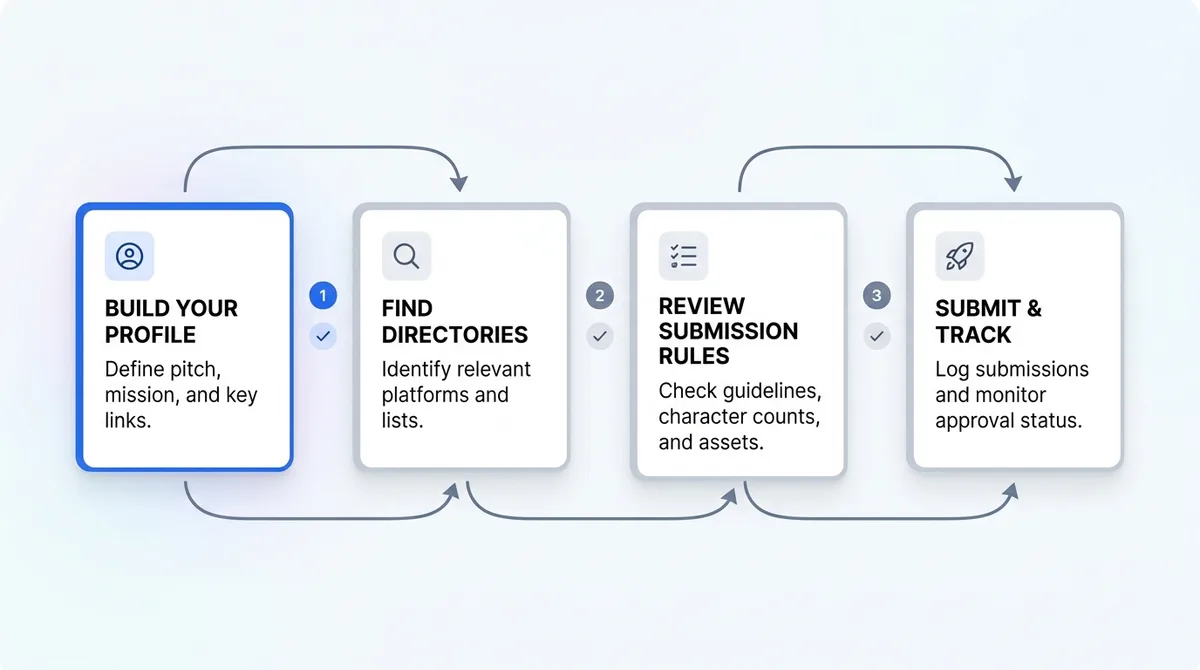
The Definitive Startup Directory Submission Checklist for More Visibility
You spent three months building a product. The code is clean, the UI is slick, and you finally pushed it to production. Then you sit back and wait for the users to roll in. Sound familiar?
They never do.
Building the thing is only half the job. The reality of being an indie hacker is that distribution dictates your survival. If you want people to use your software, you have to put it in front of them repeatedly. That is where a startup directory submission checklist comes into play. Most founders treat submitting to directories as a weekend afterthought, firing off a few links and getting frustrated when traffic flatlines.
That approach fails entirely. You need a system. I have seen decent products blow up just by organizing their launch distribution properly, while incredible tools die quietly because their founders thought marketing was beneath them. This guide breaks down exactly how to approach directories strategically so you can stop guessing and start getting actual eyeballs on your project.
What is a Startup Directory Submission?
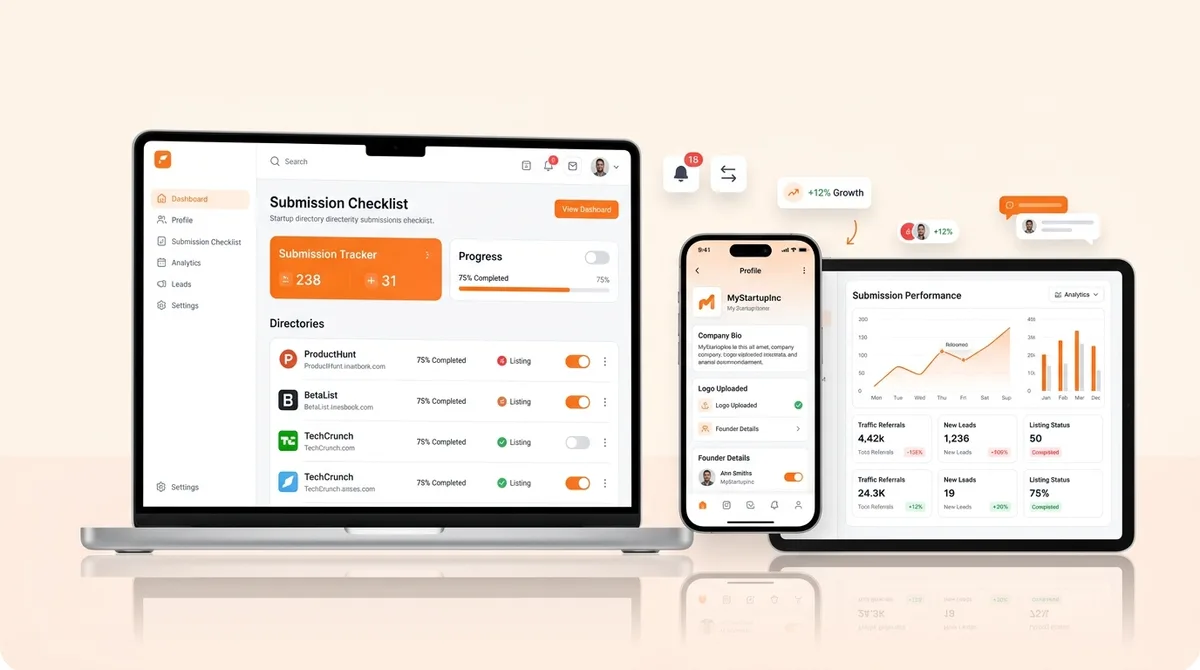
A startup directory submission is the process of manually or automatically listing your new company or product on curated platforms, review sites, and community aggregators. These submissions generate high-quality backlinks to improve search engine rankings while driving initial referral traffic from early adopters. When executed properly across dozens of platforms, it creates a foundational layer of web visibility for a new brand.
The Strategic Importance of Directory Submissions in 2026
Founders often ask me if directories still matter. They remember the spammy SEO tactics from a decade ago and assume adding a link to a generic list is a waste of time. Look, no single directory is going to turn your side project into a unicorn. That is not the goal.
The goal is compounding visibility. When you follow a structured approach to getting more exposure for your startup, directory links serve as the bedrock. You are building a web of trust signals.
Boosting Domain Authority and SEO
Search engines do not trust brand new domains. If you registered your URL last Tuesday, Google treats you like a ghost. High-quality directories change that narrative. When established platforms like Crunchbase or G2 link back to your site, they pass on trust. This is known as Domain Authority.
Getting a handful of strong "dofollow" backlinks tells search algorithms your site is legitimate. Even "nofollow" links contribute to a natural-looking backlink profile. You need both to rank for the keywords your customers are actually searching for.
Early Adopter Discovery and Feedback Loops
Regular consumers hate bugs. Early adopters actively look for them. The people browsing BetaList or AlternativeTo are specifically hunting for new, unpolished tools to test. They want to be the first to find the next big thing.
By placing your product where these innovators hang out, you get a highly forgiving initial user base. They will tell you your onboarding is broken or your pricing makes no sense. That raw feedback is worth more than any paid user testing.
Social Proof and Investor Due Diligence
Perception is reality in the early days. Imagine a potential partner, a journalist, or an angel investor hears about your product and Googles your company name.
If all that shows up is your own website and a sparse Twitter account, you look like a fleeting side project. If the first page of search results is packed with profiles on Product Hunt, Indie Hackers, PitchBook, and industry-specific lists, you instantly look like an established entity with momentum.
Phase 1: Pre-Submission Preparation (The Assets Checklist)
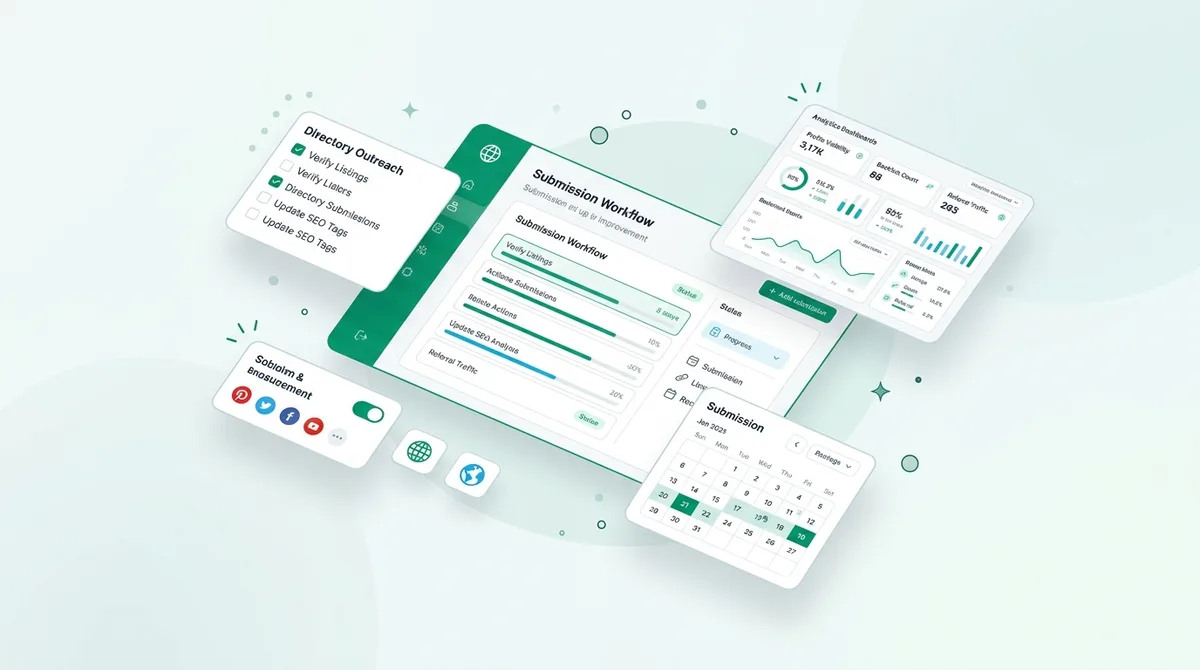
Most directory submissions are rejected because founders wing it. They try to fill out complex forms while figuring out their value proposition on the fly. You end up with spelling errors, broken links, and descriptions that make zero sense. Before you submit a single link, you need a centralized asset document.
The Copywriting Framework: One-Liner to Long-Form
Every directory asks for something slightly different. If you try to write a custom description for fifty different platforms, you will burn out in two hours. You need a master document with pre-written copy variations.
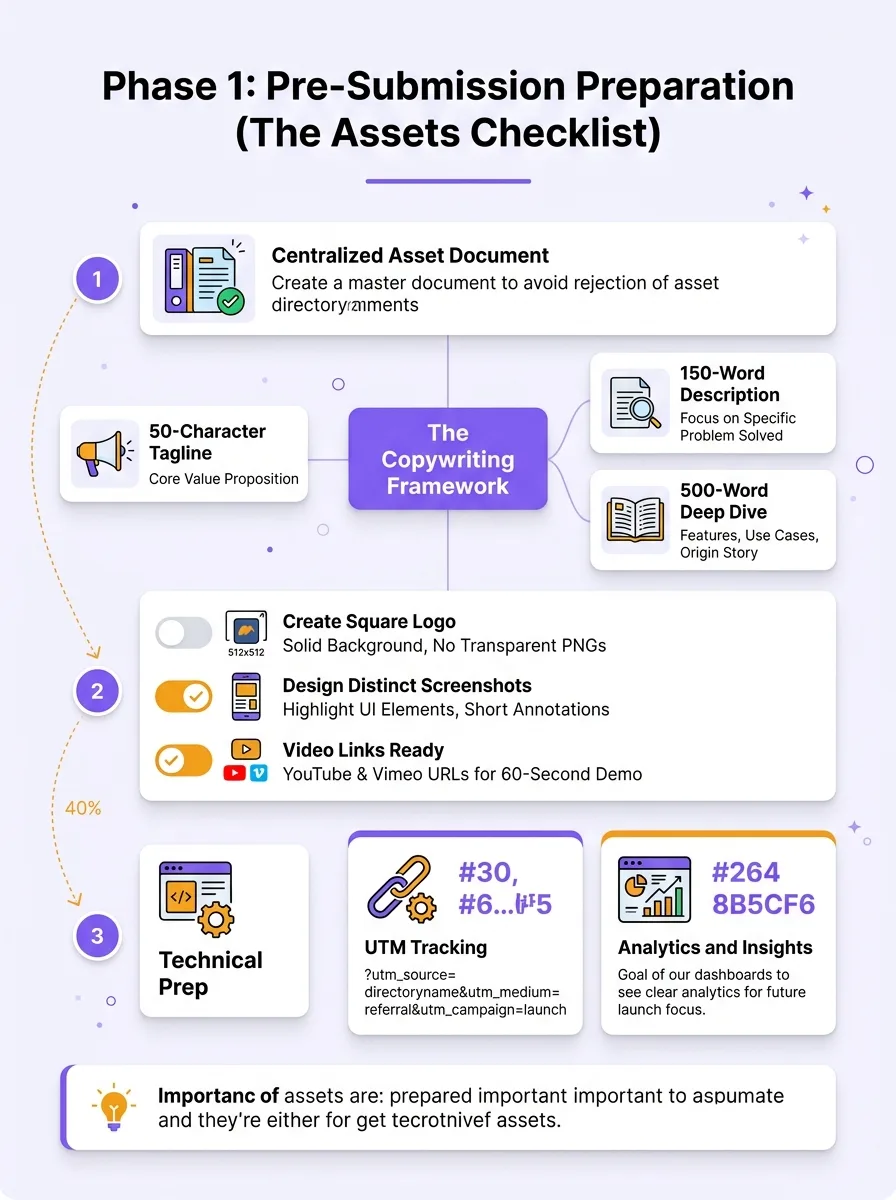
Write a 50-character tagline. This is your absolute core value proposition. Next, write a 150-word description focusing on the specific problem you solve. Finally, draft a 500-word deep dive covering features, use cases, and the origin story of why you built it. Keep this document open on your desktop. Following a solid pre-launch checklist means having these assets ready to copy and paste.
Visual Asset Optimization: Logos, Screenshots, and Video
Bad visuals kill conversion rates. A user might click your profile based on the name, but they will bounce immediately if your screenshots look like they were taken on a dirty monitor.
Create a square logo (usually 512x512) with a solid background. Transparent PNGs often render as ugly black squares on older directories.
Design distinct, scroll-stopping screenshots. Highlight specific UI elements and add short, readable text annotations.
Have a YouTube and a Vimeo link ready for your 60-second demo video. Many directories require a video URL to feature your listing.
Technical Prep: UTM Tracking and Analytics
Do not guess where your traffic is coming from. If you get a spike of 500 visitors, you need to know exactly which directory drove them so you can engage in the comments there.
Use a standard UTM structure for your submission links. Format it like this: `?utm_source=directoryname&utm_medium=referral&utm_campaign=launch`. In practice, seeing clear analytics helps you decide where to focus your energy for the next launch.
Phase 2: The 'Big Three' High-Impact Launch Platforms
Some platforms are directories. Others are full-blown launch events. The "Big Three" dictate the pace of the maker ecosystem. You do not just submit to these quietly. You orchestrate an event around them.
Product Hunt: The Gold Standard for Launches
Product Hunt can send thousands of visitors to your site in a single day. It can also send zero if you mess up the timing. The platform operates on a 24-hour cycle starting at 12:01 AM Pacific Time.
Your startup directory submission checklist must treat Product Hunt differently. You need a maker comment ready the second you launch, explaining why you built the tool. You need custom visuals tailored to their aspect ratios. What nobody tells you is that momentum in the first two hours dictates whether you make the daily newsletter. If you land in the newsletter, the traffic continues for a week.
Indie Hackers: Building in Public for Visibility
Indie Hackers is not just a place to drop a link and run. The community despises traditional marketing speak. If you post a corporate press release, you will be ignored.
Add your product to their directory, but tie it to your personal maker profile. Post milestone updates. Did you just hit $100 MRR? Post about it. Did your payment gateway break and cause a panic? Post about that too. The product directory feeds off the activity of the founders behind them.
Hacker News: Navigating the Show HN Guidelines
Submitting to Y Combinator's community is a high-risk, high-reward play. Hacker News users are deeply technical and highly critical. If your site is bloated or your privacy policy is shady, they will tear you apart in the comments.
Use the specific format `Show HN: Your Product Name - What it does`. Keep the title factual. No marketing fluff. The best strategy is to be wildly transparent in the thread. If they find a flaw, thank them and fix it live. I have seen products gain massive respect simply because the founder patched a bug within ten minutes of a Hacker News comment pointing it out.
Phase 3: Authority SaaS and Review Directories
Once you survive the initial launch spike, you need sustainable traffic. This is where business-to-business (B2B) software review directories come in. They rank exceptionally well on Google for "Best [Category] Software" searches.
G2, Capterra, and the Gartner Ecosystem
Setting up profiles on G2 and Capterra is tedious. They require verified business details and often put your listing through a manual review process that takes days. Do it anyway.
Buyers looking at G2 are usually at the bottom of the funnel. They have a budget and are comparing options. You want your profile to look immaculate. Learning how to optimize a SaaS directory listing ensures you present a clear value proposition compared to incumbent competitors. Seed your profile by asking your five happiest initial users to leave detailed reviews.
Crunchbase and PitchBook: Institutional Visibility
You might think Crunchbase is only for startups raising millions in venture capital. That is a myth. Bootstrapped indie hackers should absolutely create profiles.
These databases are heavily scraped by journalists, automated newsletters, and corporate buyers. Having an accurate, up-to-date Crunchbase profile secures an incredibly high Domain Authority backlink and puts you on the radar of people looking for emerging tech in your category.
Phase 4: AI Tools and Modern Tech Aggregators
The directory landscape shifts constantly. A few years ago, Web3 lists were everywhere. Right now, AI aggregators are driving massive volume.
The Rise of AI-Specific Directories
Platforms like "There's An AI For That" and "Futurepedia" have exploded in popularity. If your product uses AI in any meaningful way, prioritize these submissions. The traffic volume from these sites currently rivals the big traditional launch platforms.
Be specific about which AI model you use and exactly what task it automates. Users on these directories are overwhelmed with thin wrappers around ChatGPT. You have to explicitly state why your interface or workflow adds unique value.
Developer-Focused and Open Source Repositories
If you built a developer tool, API, or an open-source project, standard directories will not convert well. You need to go where engineers actually look for utilities.
Submit to LibHunt, AlternativeTo, and Awesome Lists on GitHub. The audience here cares about documentation, repository stars, and technical architecture. Make sure your README file is flawless before you submit your links.
Phase 5: Niche, Regional, and Industry-Specific Lists
Broad directories get you volume. Niche directories get you actual paying customers. A list with 500 monthly visitors in your exact vertical is worth more than a generic site with a million visitors.
Local Startup Ecosystems (e.g., BuiltIn, Startup Genome)
Do not ignore geography just because your software is global. Regional pride is a strong driver of early support. Submit your company to city-specific startup lists, local tech chambers of commerce, and regional tech blogs. Local SEO still plays a massive role in overall domain authority.
Industry Verticals: EdTech, FinTech, and Beyond
Find the directories specific to your target user. If you built a tool for teachers, a generic SaaS directory will not help much. You need to be on EdSurge. If you built a financial tool, look for FinTech aggregators.
These hyper-niche sites usually have manual submission processes and might require an email to the editor. Send a short, polite note explaining why your tool helps their specific audience.
The Submission Execution Strategy: Manual vs. Automated
You have the list. You have the assets. Now you have to actually do the work. Submitting to 100+ directories is a grind. You have two choices: spend your time or spend your money.
The DIY Manual Submission Workflow
For founders bootstrapping on zero budget, manual submission is a rite of passage. Open your master asset document on one screen and your list of target directories on the other.
Group the directories by account requirement. Do all the sites that allow guest submissions first. Then, move to the ones that require an account creation and email verification. Use a dedicated email address for this (like `launch@yourdomain.com`) because you will receive a tidal wave of spam and promotional emails once your profile is public.
Outsourcing and Automation: When to Scale
Once you value your time at more than a few dollars an hour, manual submissions become a bad business decision. You can hire virtual assistants on Upwork, but quality control becomes a massive headache. They often miscategorize your product or use the wrong branding.
The tipping point for paying for a service is usually your second product launch. By then, you know the grind is not worth it, and you are willing to pay for guaranteed execution and accurate data entry.
Common Mistakes: Why Most Directory Submissions Fail
I have audited hundreds of startup launches. The same errors pop up over and over again. Avoiding these simple mistakes puts you ahead of 90% of your competitors.
Inconsistent Branding and 'NAP' Data
NAP stands for Name, Address, Phone number. In the digital world, it translates to your Startup Name, URL, and core description. Search engines rely on consistent information to verify your identity.
If you call your product "ChatGenius" on BetaList, but "Chat Genius Pro" on G2, and link to a `.io` domain on one and a `.com` on another, you confuse the algorithms. This inconsistency ruins your SEO efforts. You also need to avoid keyword cannibalization across your own domain while ensuring external directories point exactly where they should.
The 'Set It and Forget It' Trap
Startups pivot. Features change. Pricing models evolve. Yet, most founders leave their directory listings untouched for years. Imagine a user finding your profile on AlternativeTo, getting excited about a $10/month price point, clicking through to your site, and seeing you pivoted to enterprise-only pricing starting at $500.
They bounce immediately. Keep a spreadsheet of every directory you have an account with, and update your profiles every time you make a major product shift.
Top Tools for Startup Directory Management
Managing this process out of your head is impossible. You need a system to track where you submitted, what was accepted, and what is pending.
WeekHack: The Founder's Shortcut to Visibility
If you want the benefits of directory submission without losing a week of development time, WeekHack is built exactly for this. We created WeekHack to solve the exact pain point of launch distribution.
You get weekly product launches with community voting, guaranteed dofollow backlinks to boost your domain authority, and direct exposure to a community of active indie hackers and makers. Instead of fighting with 50 different broken web forms, you handle your submission once, and we get it in front of a newsletter reaching people who actually care about new software.
Spreadsheets and Tracking Templates
If you insist on doing it manually, set up an Airtable or Google Sheet. Track the directory name, domain authority, submission URL, login credentials, submission date, and live link status. Color code it. Check back weekly to see which pending submissions have gone live.
The Master Startup Directory Submission Checklist (Actionable Summary)
Here is your rapid-fire execution list. Copy this into Notion, Linear, or whatever project manager you use.
Write core copy assets: 50-char tagline, 150-word summary, 500-word deep dive.
Design standard visual assets: 512x512 solid logo, 1270x760 annotated screenshots.
Record a clear, 60-second Loom or YouTube demo video.
Set up Google Analytics and prepare standardized UTM parameters.
Create a dedicated `launch@` email address for submissions.
Schedule and prep your Product Hunt maker comment and launch timing.
Draft an authentic, non-salesy Show HN post for Hacker News.
Submit to the major aggregator platforms: BetaList, AlternativeTo, Indie Hackers.
Claim and verify business profiles on G2, Capterra, and Trustpilot.
Create your corporate data profiles on Crunchbase and PitchBook.
Identify and submit to at least three niche, industry-specific directories.
Log every single submission in a master tracking spreadsheet.
Set a calendar reminder for 30 days post-launch to check for live links.
Frequently Asked Questions
How long does it take for directory links to impact SEO?
SEO is a slow game. When a directory publishes your listing, it might take a few days or weeks for Google to index that specific page. You generally start seeing minor movements in your domain authority and organic rankings within 60 to 90 days. It requires patience. Do not check Ahrefs every morning expecting a spike.
Should I pay for 'featured' or 'expedited' listings?
Usually, no. Many low-tier directories ask for $50 to bypass a "six-month review queue." That is almost always a scam for an incredibly weak backlink. Save your budget. The only time paid listings make sense is on high-intent platforms like Capterra (via PPC) or if you are sponsoring a newsletter associated with a highly reputable maker community.
What is the best time of year to launch on directories?
Avoid major US holidays. Late November through December is terrible because B2B buyers log off, and makers are distracted. August can also be slow due to summer vacations. The highest engagement windows generally occur in February through May, and mid-September through October. Launch when people are at their desks looking for solutions.
Conclusion: Turning Visibility into Sustainable Growth
Treat your startup directory submission checklist as a fundamental piece of your product's infrastructure. Just like setting up Stripe or configuring your database, building a backlink and distribution profile is non-negotiable for a modern software business.
It takes time, it feels tedious, and you will not see millions of users overnight. But six months from now, when your domain authority is strong enough to rank for your core keywords and organic traffic is flowing in while you sleep, you will be glad you did the work. Stop delaying. Gather your assets, start submitting, or let WeekHack handle the heavy lifting so you can get back to writing code.
Written by

Jan Orsula
Serial maker and founder of WeekHack, SocialCal, and SocialOrbit. Builds tools that help creators launch side projects, schedule social media, and generate content — so they can focus on what matters.
Related Articles
How to Collect User Feedback Before Launch: A Beginner's Plan
Stop guessing what your users want. Learn how to systematically collect pre-launch feedback using smoke tests, problem interviews, and lo-fi prototypes before writing a single line of code.
How to Write a Product Listing That Converts
Stop losing sales to bad copy. Learn how to translate your technical features into undeniable buyer benefits with this practical, maker-focused guide.
How to Write a Product Hunt Tagline That Converts
Your Product Hunt tagline is the difference between a click and a scroll. Learn how to write a 60-character pitch that converts, using proven frameworks and real examples.