
How to Get More Exposure for Your Startup in 30 Days
 Jan Orsula
The Invisible Startup: Why Great Products Fail Without Distribution
You spend three months writing code in your bedroom. You skip weekends with friends. You obsess over the pixel-perfect padding on your pricing page. Finally, you push to production, drop a link on your personal Twitter, and wait for the Stripe notifications to roll in.
Nothing happens.
Not a single visitor!
Most founders make this exact mistake. They operate under the delusion that if the software is fast and the UI is beautiful, users will magically discover it. That is a myth. The internet does not care how clean your React components are. The harsh truth is that terrible products with great distribution beat amazing products with zero distribution every single time.
If you are staring at a flatline Google Analytics dashboard, you are not alone. Figuring out how to get more exposure for your startup is the single highest-leverage skill you can learn as a founder. It matters more than your tech stack. It matters more than your logo. If you cannot get eyeballs on your offer, your startup does not exist.
This guide is your way out of the void. We are going to look at a realistic, 30-day roadmap to manufacture visibility from thin air. No massive ad budgets. No PR agencies. Just practical, maker-led growth tactics.
How to Get More Exposure for Your Startup: The Quick Answer
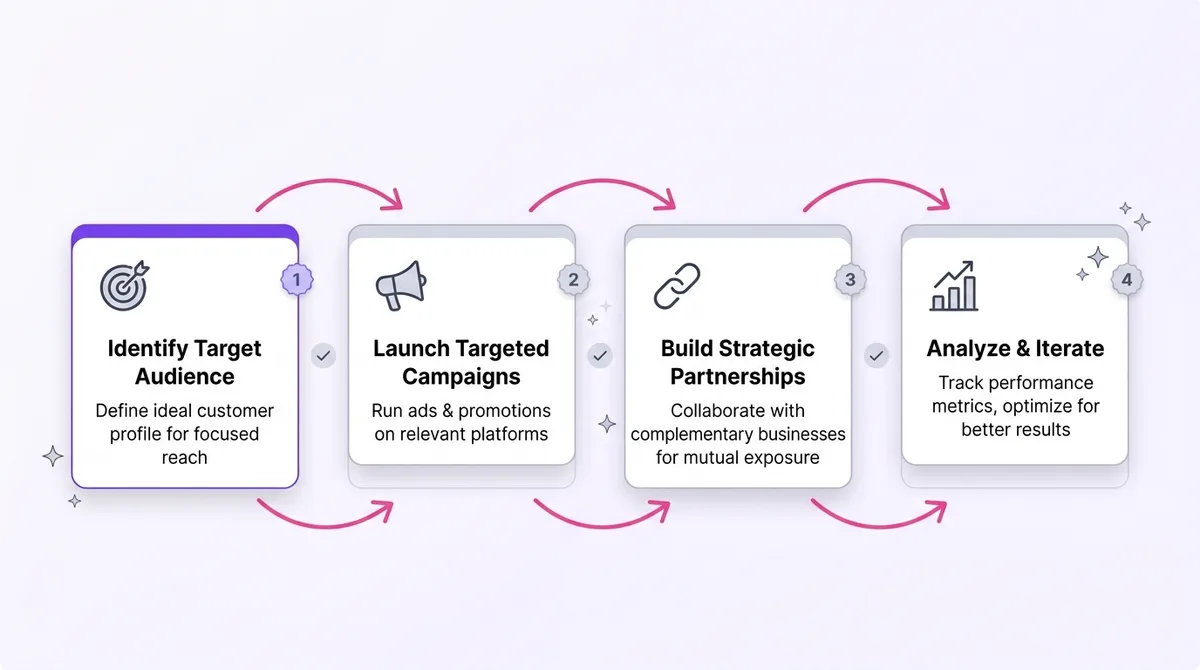
Getting more exposure for your startup requires shifting your focus from building features to building distribution channels. You need to combine transparent "build in public" social updates, high-value community engagement on platforms like Hacker News, and targeted SEO comparison pages. By creating micro-tools and repurposing core content across multiple networks, you can consistently drive high-intent traffic to your product without spending money on ads.
The 'Ghost Town' Syndrome: Why Early Growth is So Difficult
Early growth feels like screaming into a void. Sound familiar?
Here is what actually happens when a new maker enters the arena. You have zero domain authority, meaning Google ignores your landing page. You have a small social following, meaning the algorithms suppress your outbound links. You have zero budget, so you cannot buy your way to the top of the feed.
The market is deafeningly noisy. Every day, hundreds of new SaaS apps launch. Standing out is not about being slightly better; it is about being impossible to ignore. In practice, one of the most common mistakes first time entrepreneurs and startups make is assuming that marketing happens after the product is finished. They view distribution as a switch they can just flip on launch day.
The algorithms are literally designed to keep users on their respective platforms. If you drop a raw link to your startup on X or LinkedIn, the platform will throttle your reach. They want engagement, not external clicks. Overcoming the Ghost Town Syndrome requires a complete mental pivot. You have to stop acting like a billboard and start acting like a magnet.
Strategy 1: Leveraging the 'Build in Public' Flywheel
Building in public is not about bragging about your monthly recurring revenue. It is about vulnerability. It is about documenting the messy, chaotic reality of bringing an idea to life.
People connect with people, not faceless corporate logos. By sharing your journey, you invite early adopters to feel like investors in your success. They stick around because they want to see how the story ends.
What to Share: Finding Your Narrative Hooks
Most founders get this wrong. They tweet "Just pushed an update to the user dashboard." Nobody cares. You need narrative hooks.
What actually works is sharing the friction. Share the technical hurdle that took you four days to solve. Post a screenshot of a brutally honest user feedback email. Explain why you decided to rip out a feature you spent weeks building.
Numbers also perform incredibly well. Share your server costs. Share your conversion rates. Share the exact number of cold DMs you sent and how many replied. Transparency builds trust faster than any marketing copy ever could.
Platforms That Drive Real Referral Traffic
Not all platforms are created equal for makers. X (Twitter) remains the strongest real-time network for indie hackers, but it requires high volume. LinkedIn has incredible organic reach right now if you format your posts as personal stories rather than corporate updates.
Then you have dedicated maker networks like Indie Hackers and Wip.co. These places are goldmines. Getting involved there does not just bring traffic; it brings the right kind of traffic. Other makers are usually the most forgiving early adopters you can find. They understand the bugs. They will give you actionable feedback.
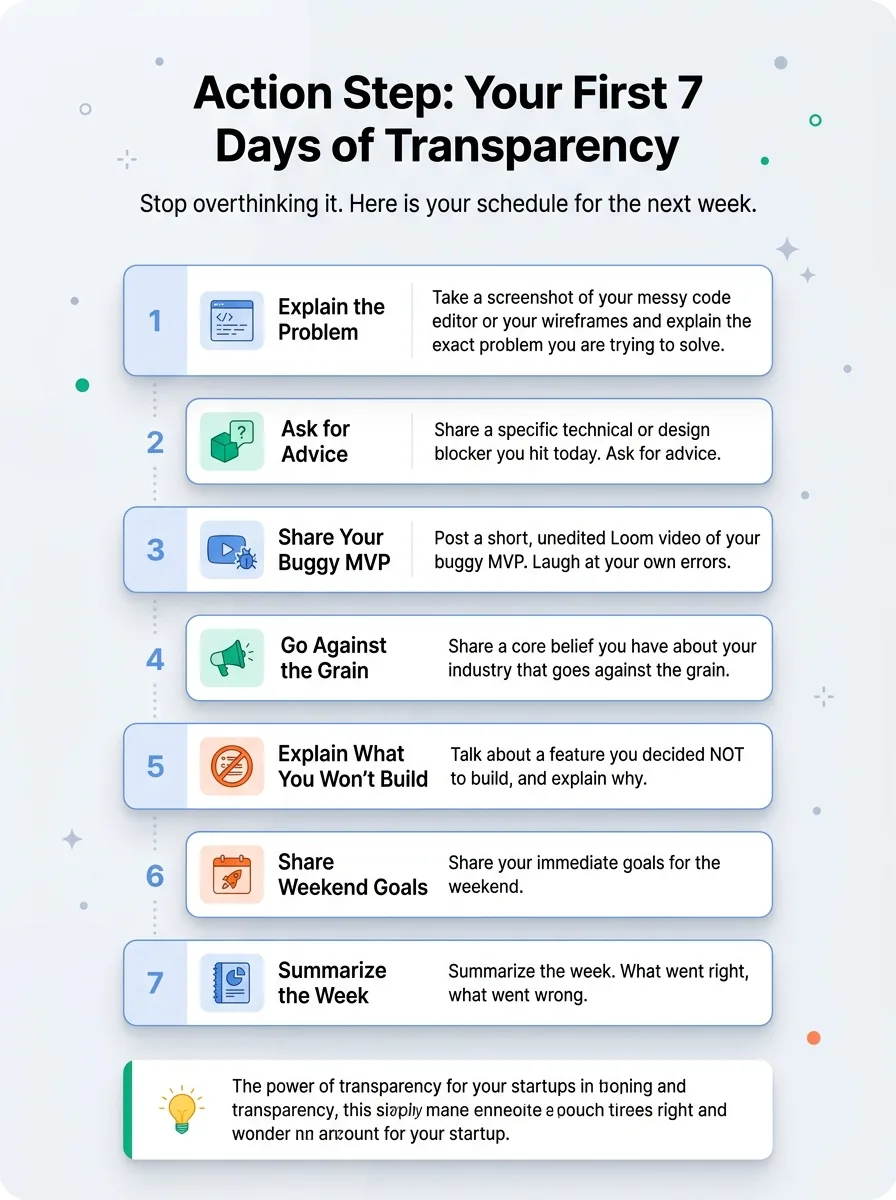
Action Step: Your First 7 Days of Transparency
Stop overthinking it. Here is your schedule for the next week.
Day 1. Take a screenshot of your messy code editor or your wireframes and explain the exact problem you are trying to solve.
Day 2. Share a specific technical or design blocker you hit today. Ask for advice.
Day 3. Post a short, unedited Loom video of your buggy MVP. Laugh at your own errors.
Day 4. Share a core belief you have about your industry that goes against the grain.
Day 5. Talk about a feature you decided NOT to build, and explain why.
Day 6. Share your immediate goals for the weekend.
Day 7. Summarize the week. What went right, what went wrong.
Strategy 2: Tactical Community Marketing (Reddit and Hacker News)
If you want a massive spike in traffic, communities are where you go. But they are also minefields. Redditors and Hacker News regulars can smell self-promotion from a mile away. If you walk in and drop a link, you will get downvoted into oblivion.
Mastering the 'Value-First' Commenting Framework
To survive on Reddit, you must give 90% and ask for 10%. I have seen products blow up just by following this rule.
Find subreddits where your ideal users hang out. Do not post about your product immediately. Spend two weeks commenting on other people's problems. When you finally do create a post, make it an educational essay. Write 800 words detailing how you solved a specific problem your target audience faces. Give them the entire solution for free within the post text.
At the very bottom, add a simple disclaimer. "I actually built a small tool to automate this exact process. If you want to skip the manual work, you can check it out here." That is it. That tiny link will drive more qualified traffic than a thousand dollars in Google Ads.
The Art of the Show HN and Subreddit Launch
Hacker News is the holy grail for technical products. According to Kinsta's breakdown of platform demographics, these communities possess highly technical, engaged user bases that actively seek out new tools. A front-page Show HN post can deliver ten thousand visitors in a single day.
Your title needs to be purely descriptive. No marketing fluff. "Show HN: A lightweight database for edge computing."
The moment you post, immediately add the first comment. Introduce yourself. Explain why you built it. Acknowledge the rough edges. Say something like, "I know there are bigger alternatives out there, but I wanted something faster and cheaper for personal projects." Be incredibly responsive. Answer every single question with technical depth. Humility wins the Hacker News crowd.
Strategy 3: The 'Alternative To' SEO Playbook
SEO takes months, right? Yes, usually. But there is a shortcut for new startups. You do not try to rank for broad, highly competitive terms like "project management software." You rank for competitor alternatives.
People searching for "Alternative to Jira" are angry. They have high buyer intent. They are literally holding their credit cards, begging for a reason to switch. You need to catch them at that exact moment.
Identifying Profitable Competitor Keywords
Make a list of the 800-pound gorillas in your space. The bloated, expensive, universally disliked incumbents.
Use a basic keyword tool to check the search volume for "[Competitor] alternative" or "[Competitor] vs [Your Startup]". You will often find hundreds of searches a month with incredibly low keyword difficulty. Because the big companies rarely bid on these terms effectively, and they certainly do not write honest comparison pages about themselves.
Drafting Comparison Pages That Convert
Do not just build a feature grid with green checkmarks for your product and red crosses for theirs. Users see right through that.
Be honest. Acknowledge what the giant company does well. "If you need enterprise compliance and 500 integrations, you should stick with them. But if you are a team of five who just wants a fast, clean interface without the clutter, here is why we built our tool."
Structure the page cleanly. Address the pricing differences. Highlight your superior customer support. Show actual screenshots of your clean UI next to their cluttered one. This transparency converts skeptical searchers into trial users.
Strategy 4: High-Velocity Content Distribution
Imagine you spend a week writing an amazing blog post. You hit publish. You tweet the link once. And then you never talk about it again.
That is a massive waste of effort. The secret to how to get more exposure for your startup is not creating more content; it is distributing the content you already have relentlessly.
The 'Hub and Spoke' Content Model
Think of your core piece of content as the hub. Let us say it is a 2000-word guide on optimizing database queries.
That single hub needs to generate a dozen spokes. You pull three interesting statistics from it and make them standalone LinkedIn posts. You take the five main headers and turn them into an actionable Twitter thread. You send a summary to your email list. You record a five-minute audio breakdown for a micro-podcast. You pitch the core concept as a guest post to a larger industry blog.
Write once, distribute ten times.
Repurposing Long-form Content for Viral Social Threads
Social media algorithms reward native content. They hate outbound links.
To hack this, you must extract the absolute best value from your blog post and give it away for free on the timeline. Write a compelling hook. "I spent 40 hours optimizing our database queries so you don't have to. Here are 5 quick wins that cut our server costs in half."
Deliver the actual steps in the thread. Make it so valuable that people bookmark it. Only at the very bottom, in the final post of the thread, do you softly mention your startup and link to the full article. The sheer amount of retweets on the native content will drag your link to thousands of screens.
Strategy 5: Engineering as Marketing (Micro-Tools)
Building a side-project to market your main project sounds crazy. But engineering as marketing is one of the most effective user acquisition channels in existence.
People love free utility. If you can solve a tiny, annoying problem for free, people will link to it, bookmark it, and share it.
Finding 'Unit Tasks' Your Target Audience Struggles With
Look at your target user's daily workflow. What is one tiny thing they have to do that causes friction?
If you sell an SEO tool, build a free meta-tag generator. If you sell a design app, build a free color palette extractor. If you sell a financial tool, build a simple runway calculator.
It should take you no more than three days to build this micro-tool. It needs to do exactly one thing perfectly. No login required. No paywall. Immediate gratification.
Distributing Your Micro-Tool for Maximum Backlinks
Once the free tool is live, launch it everywhere. Put it on Product Hunt. Submit it to tool directories. Getting featured on lists covering 385+ Free Tools & Resources for Entrepreneurs and Startups gives you permanent, high-quality backlinks that boost your main startup's domain authority.
Make sure the micro-tool lives on a subdomain or a subfolder of your main startup website. Have a clear, unobtrusive banner at the top: "Built by the team at [Your Startup] - The easiest way to handle [Main Problem]." You will capture a steady stream of leads who came for the free utility and stayed for the premium product.
Real-World Examples: Startups That Won the Exposure Game
Theory is fine. But looking at founders who actually executed this is better.
Take Buffer, for example. In their early days, nobody knew who they were. Their founder, Joel Gascoigne, didn't just wait for traffic. He wrote around 150 guest posts in nine months. He targeted every marketing blog that would accept his writing. That relentless distribution drove their first 100,000 users. He used the hub and spoke model before it even had a name.
Look at Gumroad. Sahil Lavingia built the initial prototype over a weekend. His distribution strategy? He searched Twitter for people complaining about how hard it was to sell digital files. He cold-replied to them with a link to Gumroad. He built the company entirely in public, sharing revenue numbers, layoffs, and eventual triumphs. That transparency built a fiercely loyal creator community.
These companies didn't win because they had complex marketing funnels. They won because they picked a few maker-led exposure channels and hammered them consistently.
How to Get More Exposure for Your Startup Effectively with WeekHack
Managing all these distribution channels simultaneously can quickly become overwhelming. You are trying to ship code, answer support tickets, and now you have to run a 30-day marketing sprint.
This is where structured platforms come in. Using a community like WeekHack allows you to maintain a high velocity of marketing experiments. WeekHack focuses on weekly product launches with community voting, which creates a forcing function for your updates. Instead of shouting into the void on Twitter, you are presenting your product to an active community of builders who actually want to test new software.
Plus, launching on WeekHack secures guaranteed dofollow backlinks, which immediately aids your Strategy 3 (SEO) efforts. It acts as a central hub where your build-in-public updates meet a concentrated audience. It is a very practical way to stack your exposure efforts without losing your mind.
The 30-Day Startup Exposure Checklist
Let's make this actionable. Print this out. Tape it to your monitor. Before you begin this 30-day sprint, ensure you've completed The 3-Tier Pre-Launch Checklist Every Maker Needs so your landing page actually converts the traffic you generate.
Week 1: The Foundation
Identify your top 3 competitors and map out their weak points.
Draft and publish one "Alternative To" landing page.
Set up your X and LinkedIn profiles for building in public. Post your first raw update.
Find 5 relevant subreddits and start leaving helpful, link-free comments.
Week 2: The Micro-Tool
Identify a single "unit task" your users hate doing.
Spend 48 hours building a free, no-login micro-tool to solve it.
Host it on your main domain.
Launch the micro-tool on a platform like WeekHack and smaller directories.
Week 3: Content Velocity
Write one high-value, technical blog post detailing a problem you solved.
Break that post down into 3 Twitter threads and 2 LinkedIn stories.
Reach out to 3 newsletters in your niche and offer the content for free.
Continue posting daily build-in-public updates, focusing on metrics or failures.
Week 4: Community Launch
Prepare your Show HN post. Write a humble, detailed introductory comment.
Go back to the subreddits you've been engaging with and post a value-heavy essay about your journey.
Consolidate your learnings from the month and share a transparent "30 Days of Growth" post across all your social channels.
Engage with every single comment or reply you receive.
FAQ: Common Questions About Getting Startup Exposure
Should I run paid ads to get early startup exposure?
Absolutely not. Unless you have massive funding, paid ads will drain your bank account before you even validate your product. Ads mask fundamental product flaws. Organic growth forces you to build something people actually want to share.
When is the right time to launch on Product Hunt?
Do not wait until your product is perfectly polished. Launch when your core utility works. Use smaller directories and communities first to fix the initial bugs, then coordinate a larger launch when you have a small base of supporters to help upvote.
How do I measure the ROI of building in public?
In the first 30 days, ignore direct revenue attribution. Measure conversations. Track how many DMs you get, how many newsletter signups occur, and how many people click your profile link. Building an audience compounds slowly, then all at once.
Is SEO dead for new startups?
Broad SEO is extremely difficult. Niche SEO is wide open. As noted in Ahrefs' guides on search intent, highly specific long-tail queries and competitor alternatives are where small startups can easily steal traffic from giants.
Sustaining Your Growth Beyond the First Month
Getting that initial spike of traffic feels incredible. The dopamine hits hard. But what separates successful indie hackers from the rest is what happens on day 31.
Consistency is your ultimate unfair advantage. Anyone can post an update for a week. Very few founders can maintain a steady rhythm of product updates, micro-tool launches, and community engagement for a year. Tools like WeekHack can help you maintain that cadence by giving you a reliable schedule to aim for.
Stop worrying about building the perfect marketing funnel. Pick two of the strategies above, execute them ruthlessly, and let the compounding effects do the heavy lifting.
Written by

Jan Orsula
Serial maker and founder of WeekHack, SocialCal, and SocialOrbit. Builds tools that help creators launch side projects, schedule social media, and generate content — so they can focus on what matters.
Related Articles
How to Get Comments on Product Hunt: 5 Proven Launch Strategies
Most makers obsess over Product Hunt upvotes, but comments are what actually drive the ranking algorithm. Learn how to craft the perfect maker story, run feedback-first outreach, and dominate the first 4 hours of your launch.
How to Improve Your Launch Conversion Rate Step-by-Step
Struggling to turn product launch traffic into actual sales? Discover a practical, step-by-step framework to fix your messaging, remove friction, and drastically improve your conversion rates.
How to Collect User Feedback Before Launch: A Beginner's Plan
Stop guessing what your users want. Learn how to systematically collect pre-launch feedback using smoke tests, problem interviews, and lo-fi prototypes before writing a single line of code.