
How to Write a Product Hunt Tagline That Converts
 Jan Orsula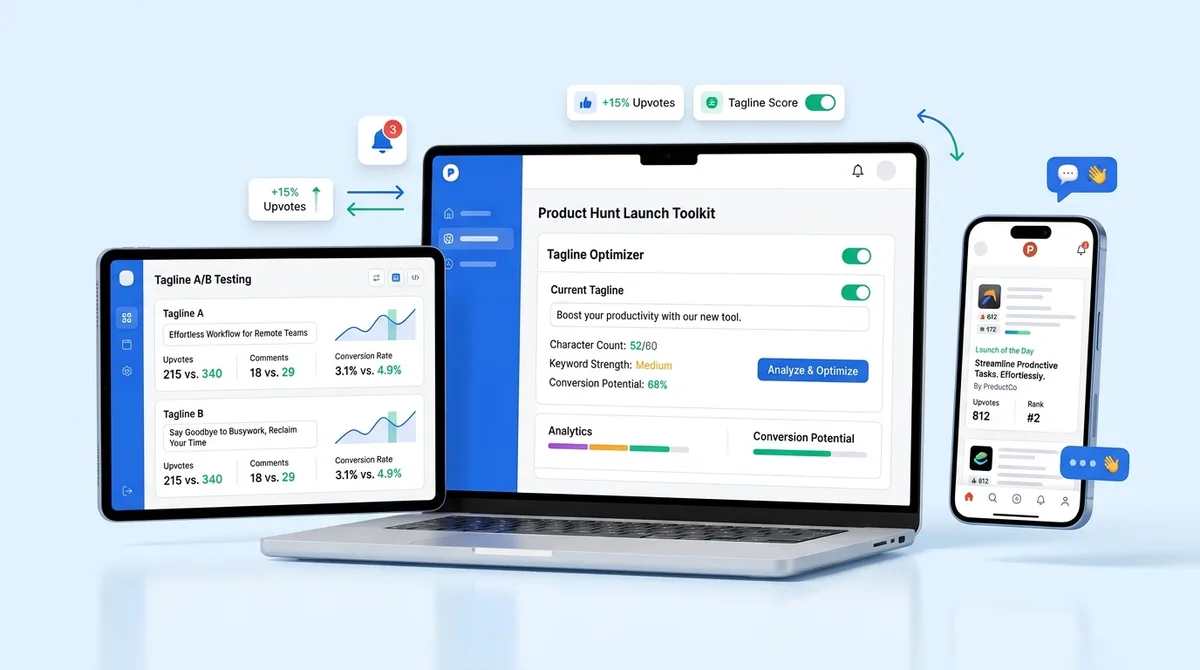
Why Your Product Hunt Tagline is the Difference Between a Click and a Scroll
You spend three months coding in a dark room. You finally set a launch date, prep the screenshots, and write a detailed maker comment. Then you stare at the 60-character input field for your pitch and freeze. Sound familiar?
Most founders get this wrong. They treat the tagline like an afterthought. They just slap their GitHub repo description into the box and hope for the best.
But on launch day, your tagline is the difference between a click and a scroll. Figuring out how to write a Product Hunt tagline is basically figuring out how to pitch your entire startup in three seconds. Let's fix that blank stare.
What is a Product Hunt Tagline?
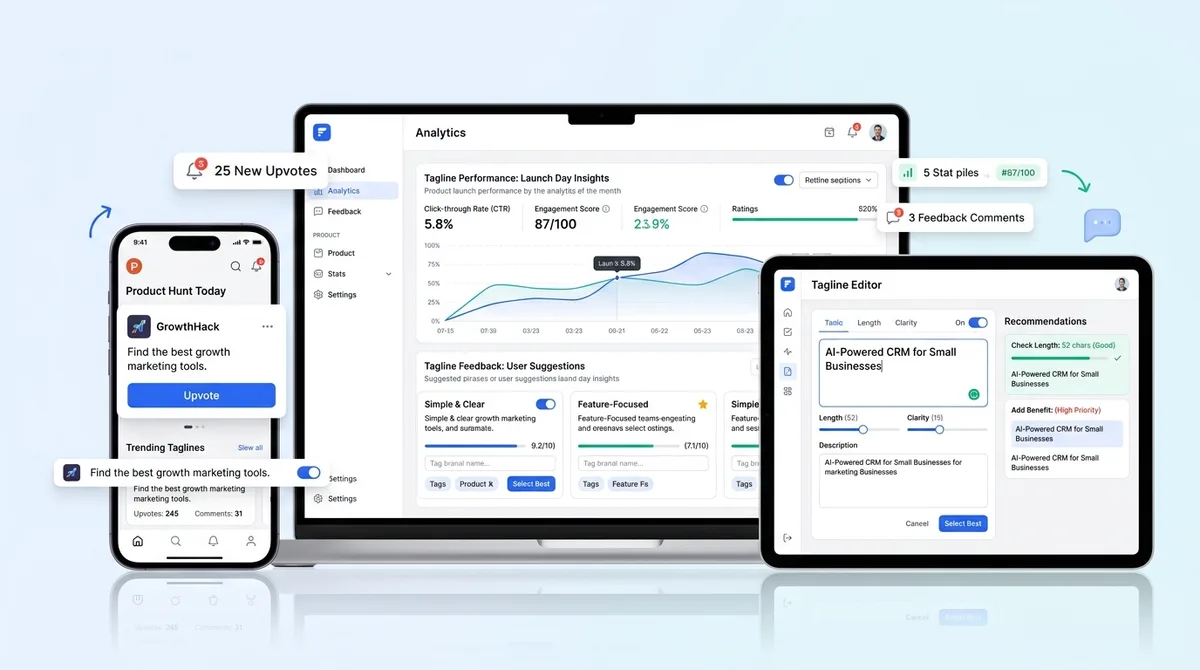
A Product Hunt tagline is a short, 60-character description that appears directly beneath your product's name in the daily feed. Its primary job is to explain what your product does and why someone should care enough to click. Think of it as your digital elevator pitch optimized for fast scrollers.
Strategy 1: Focus on the Transformation, Not the Tech
Makers love their tech stacks. I get it. You spent weeks getting that custom backend to respond in under 200 milliseconds.
But the hard truth is that users simply do not care about your database architecture. They care about what your product allows them to do. If you want to master how to write a Product Hunt tagline, you need to sell the transformation.
The 'Benefit-First' Formula
Lead with the end result. "AI-powered task manager built with Next.js" is boring. "Get 10 hours back every week" makes me want to click.
People buy better versions of themselves. Show them that better version immediately. Tell them exactly how their life improves the second they sign up.
Strategy 2: Use Proven Frameworks for 60-Character Clarity
You don't need to be a brilliant copywriter to nail this. You just need a structure that works.
Staring at a blank page is a recipe for overthinking. What actually works is using proven mental models that reduce friction for the reader. I've read dozens of autopsies on why a product launch failed, and muddy messaging is almost always the root cause.
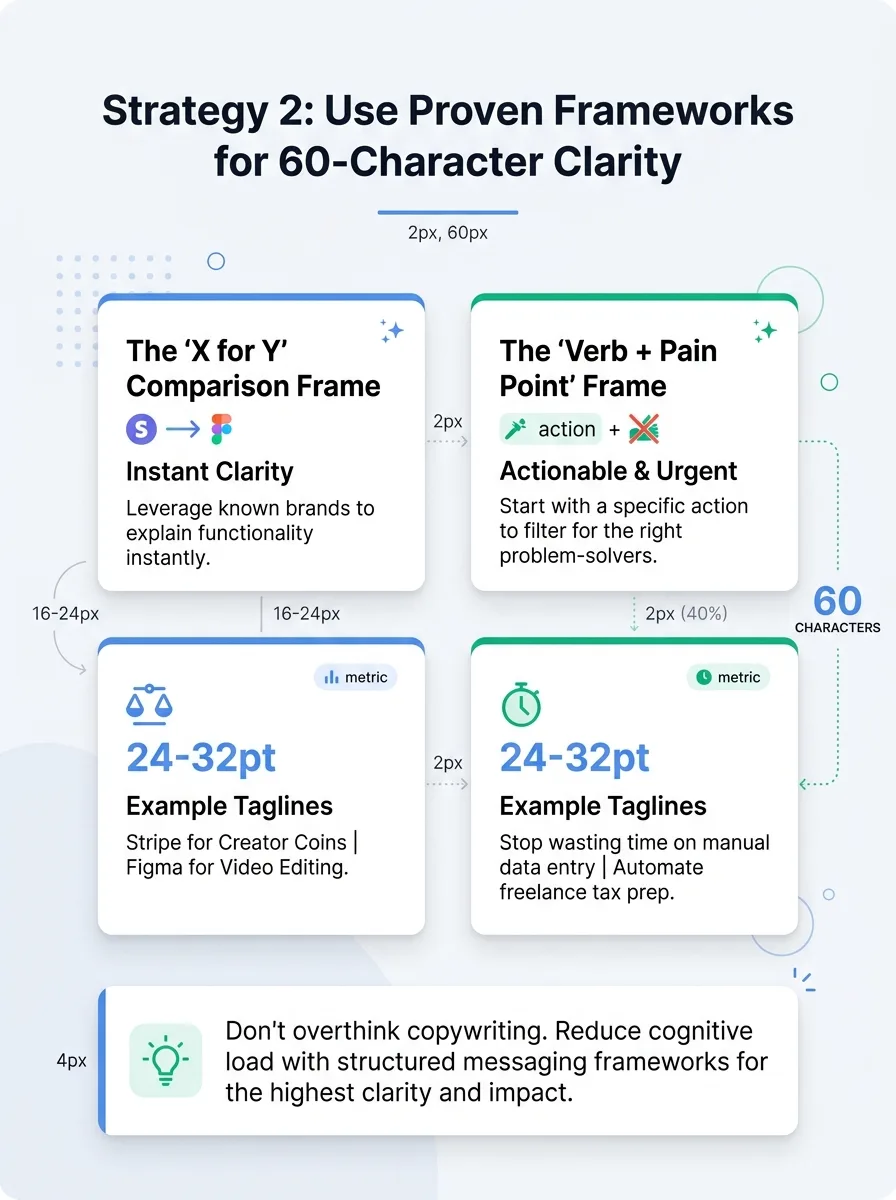
The 'X for Y' Comparison Frame
This is the classic shortcut. Think "Stripe for Creator Coins" or "Figma for Video Editing."
It relies on established brands to instantly communicate complex functionality. The cognitive load drops to zero. Just make sure the company you reference is universally understood, otherwise you just pile confusion on top of confusion.
The 'Verb + Pain Point' Frame
Start with an action. Tell them exactly what to do.
"Stop wasting time on manual data entry." "Automate your freelance tax prep." It drives urgency and filters out anyone who doesn't have that specific problem.
Strategy 3: Optimize for 'Scanability' and the Browser Experience
The Product Hunt homepage is a chaotic place. Your potential user is scrolling past dozens of logos while drinking their morning coffee.
If they have to read your pitch twice to understand it, they are already gone.
Front-Loading Your Value Proposition
Mobile screens truncate text. The first 30 characters are your prime real estate.
Put the most important words at the exact beginning of the sentence. Don't hide the main benefit at the end where it might get cut off by a smaller browser window.
Strategy 4: Iterate and Validate Before Launch Day
Don't guess. Test it.
Founders are terrible judges of their own copy because they suffer from the curse of knowledge. You already know what the tool does. If you are researching how to get upvotes on Product Hunt, start by making sure your pitch is validated by real humans before day zero.
Running a 'Five-Second Test'
Find five people who have no idea what you are building. Show them the text for exactly five seconds.
Take it away and ask them what the product does. If they stumble, rewrite it. This is practically mandatory.
4 Mistakes That Kill Your Product Hunt Conversion Rate
I see the same errors every single Tuesday on the timeline.
The 'Coming Soon' or 'Just Launched' Fluff
Absolute waste of space. The whole site is for things that just launched. Never use your limited character count on redundant status updates.
Overusing Jargon and Superlatives
Words like "best" or "ultimate" actually decrease trust. The Nielsen Norman Group published studies on trustworthy design proving that promotional language kills credibility online.
Just state the facts. "The most advanced Web3 synergy protocol" sounds like a scam. "Send crypto to an email address" sounds like a utility.
The Ultimate Product Hunt Tagline Checklist
Run your draft through this before you hit publish.
Keep it under 60 characters so it never truncates.
Strip out heavy adjectives like disruptive or revolutionary entirely.
Show it to a total stranger and see if they understand it in three seconds.
Capitalize the first letter of the sentence, but avoid title casing every single word because it looks unnatural.
Preview how it looks on a mobile browser.
Frequently Asked Questions about PH Taglines
Can I change my tagline after launching?
Yes, you can edit it while the launch is live. But it takes time to reflect on the main feed, and you lose the momentum of your initial push. If you completely botch your messaging, you might start wondering if you can relaunch on Product Hunt down the road. Save yourself the headache and nail it today.
Should I use emojis?
Maybe one, if it perfectly fits the brand vibe. A string of three fire emojis just makes you look desperate for attention.
What if my product does ten different things?
Pick the one thing that solves the biggest pain point. You can explain the other nine features in your maker comment.
Conclusion: Your 60 Characters to Success
Writing a great hook takes more time than you think. Keep it simple, focus on the user, and ruthlessly cut the fluff.
Once you have that perfect tagline locked in, drop your project on WeekHack. We built it so founders can test their messaging, get early feedback, and secure a guaranteed dofollow backlink before the massive launch day pressure hits.
Written by

Jan Orsula
Serial maker and founder of WeekHack, SocialCal, and SocialOrbit. Builds tools that help creators launch side projects, schedule social media, and generate content — so they can focus on what matters.
Related Articles
How to Collect User Feedback Before Launch: A Beginner's Plan
Stop guessing what your users want. Learn how to systematically collect pre-launch feedback using smoke tests, problem interviews, and lo-fi prototypes before writing a single line of code.
The Startup Directory Submission Checklist for More Visibility
A complete, actionable guide to submitting your startup to directories. Learn how to boost domain authority, secure early users, and build a backlink profile that drives sustainable growth.
How to Write a Product Listing That Converts
Stop losing sales to bad copy. Learn how to translate your technical features into undeniable buyer benefits with this practical, maker-focused guide.