
How the Instagram Algorithm Works - Your 2026 Action Plan
In 2025, understanding the Instagram algorithm isn’t optional—it’s the difference between growth and invisibility.
You’ve probably noticed it: some creators seem to blow up overnight with raw, unpolished posts, while others—despite consistent effort—barely crack double-digit likes. What changed?
Instagram did. Quietly but significantly.
Behind the scenes, the platform has undergone a radical transformation. In early 2025, Adam Mosseri (Head of Instagram) announced major updates to Instagram’s ranking systems.
The biggest shift?
Instagram no longer operates on a single algorithm. Instead, it now uses a network of AI-powered algorithms, each tailored to different content types—Feed, Stories, Reels, and Explore—and two different audience types: connected reach (your followers) and unconnected reach (new audiences who don’t follow you yet).
This change isn’t just technical—it rewrites the rules of visibility, engagement, and growth on the platform.
Why 90% of Instagram Strategies Are Now Outdated
The strategies that worked a year ago—like posting daily, using 30 hashtags, or focusing solely on likes—are not only ineffective in 2025, they’re actively limiting your reach. Here's why:
- The algorithm now prioritizes share-to-reach ratios and watch time, not just surface-level engagement.
- Instagram SEO—yes, search engine optimization on Instagram—is now a major discovery driver.
- “Shadowbanning” fears are often misplaced, yet real visibility penalties do exist when content doesn’t align with new quality standards.
Creators and brands who haven’t adapted are finding themselves in an echo chamber—speaking only to their existing audience, with no real growth or discovery.
A New Era of Algorithm Strategy
This article is not another “Post Reels 5x a week” guide.
Instead, it’s a complete breakdown of how Instagram’s algorithms actually work in 2025—and how to work with them (not against them) to grow faster, build deeper engagement, and convert that attention into real business results.
We’ll cover:
- How each algorithm (Feed, Stories, Reels, Explore) ranks your content differently
- The connected vs. unconnected reach model—and how to tap into both
- What actually triggers growth today—based on real-world data, not outdated myths
- Step-by-step strategies, optimization frameworks, and content planning tools
Whether you’re a creator, a business owner, or a marketer managing multiple accounts, this is your roadmap to surviving—and thriving—in the algorithmic jungle of 2025.
Let’s decode the machine. And then make it work for you.
Understanding Instagram Algorithm Ecosystem (2025)
To win on Instagram in 2025, you need to stop thinking of the algorithm as one monolithic force. It’s not.
Instagram now uses multiple algorithms across different parts of the app—each designed to serve different user intents and behaviors. What performs well in the Feed might flop on Reels. What works on Explore might go completely ignored in Stories.
This section breaks down each algorithm’s unique ranking signals, the key 2025 updates that changed the game, and the real metrics that matter.
The Multi-Instagram Algorithm Reality

1. Feed Algorithm
The Feed is your home base—it primarily serves content from people you follow. In 2025, the Feed algorithm focuses on three key factors:
- Relationship strength: DMs, comments, profile visits, and saves now heavily influence whether your post appears in a follower’s Feed. Passive followers won’t cut it.
- Interest prediction: Instagram uses past behavior (what posts someone lingers on, engages with, or shares) to predict whether your content is relevant.
- Recency: While chronological order is still gone, the algorithm favors newer content—but not at the cost of engagement. A two-day-old post with strong watch time can still be prioritized.
If your Feed posts don’t earn shares or saves within the first hour, the algorithm deprioritizes them—even to your own followers.
2. Stories Algorithm
Stories are now driven by two main signals:
- Viewing history: Who regularly taps through your Stories and spends time watching them.
- Engagement behavior: Replies, sticker interactions, and link clicks are strong signals of relevance.
Instagram’s goal is to keep people inside the app longer, and engaging with Stories is a big part of that. The more interactive your Stories, the more likely they’ll stay in top position on your audience’s Story bar.
Tip: Use interactive stickers (polls, sliders, questions) consistently—they’re one of the most reliable ways to train the algorithm.
3. Reels Algorithm
Reels are Instagram’s biggest discovery tool. The Reels algorithm prioritizes:
- Watch time: Completion rates matter, but looping behavior (when people rewatch) is even more valuable.
- Share ratio: How often people send your Reel to others compared to how many people it reaches.
- Engagement variety: Likes, comments, saves, and shares all matter—but shares + rewatches dominate.
Pro tip: 30–60 second Reels with an unexpected payoff at the end increase loop rate and ranking potential.
4. Explore Algorithm
The Explore page is designed for discovery—but it’s not random.
It surfaces content based on:
- User similarity patterns: If people similar to you engage with a certain type of post, you’re more likely to see that type of content.
- Topical clusters: Instagram categorizes your content based on keywords, alt text, hashtags, and engagement behavior to group it into interest niches.
Pro tip: Consistency in content themes (what you talk about and how) helps the Explore algorithm "understand" your niche and distribute your content better.
2025 Instagram Algorithm Updates: What Actually Changed
The most important 2025 shift is the distinction between:
- Connected Reach: Your content being shown to your existing followers
- Unconnected Reach: Your content reaching people who don’t follow you (through Reels, Explore, or suggested posts in Feed)
Instagram now treats these two reach types differently. Content that gets high engagement from followers may not automatically perform well with non-followers unless it meets discovery-focused criteria like retention, shares, and relevance.
Other key updates:
- AI-powered personalization: Instagram now uses more sophisticated machine learning to tailor every user’s feed. Two people with the same follow list will see very different content.
- Engagement quality > quantity: One thoughtful comment > 20 likes. Instagram values depth and intent.
- Transparency tools: You can now track estimated reach types (connected vs. unconnected) in Insights—if you know where to look.
Key Ranking Signals Deep-Dive
Here are the three core metrics that every content type is judged on in 2025:
1. Watch Time
Especially important for Reels and video-based Feed posts. Instagram tracks:
- How long someone watches your content
- If they rewind or rewatch
- If they exit the app afterward (bad signal)
2. Shares per Reach
It’s not about how many views you get—it’s how many people thought your content was worth sharing. This ratio is now weighted heavily across all algorithms.
- 1,000 views with 5 shares = 0.5% share rate
- 1,000 views with 50 shares = 5% share rate (massive difference)
3. Profile Visits & Follows
The algorithm notices when a piece of content leads to:
- A profile tap
- A follow action
- A bio link click
This signals content relevance and quality—and directly impacts unconnected reach potential.
Debunking Instagram Algorithm Myths
For every post that goes viral, there are a hundred creators asking, “Was I shadowbanned?” or “Should I be posting daily?”
Instagram’s algorithm remains one of the most misunderstood systems on the internet—and misinformation is rampant. But here’s the truth:
Most creators aren’t being punished by the algorithm. They’re just playing by rules that haven’t existed for years.
In this section, we’ll clear the air and give you the real facts behind the biggest Instagram algorithm myths.
The Shadowban Reality
Let’s get one thing straight: the shadowban is real—but not in the way most people think.
Instagram doesn’t “ban” your account in secret. But it does limit distribution if your content consistently triggers red flags.
What Actually Happens:
- Your content gets hidden from Explore or Hashtag pages if flagged as low-quality or engagement-baiting
- You lose unconnected reach, especially on Reels and Explore
- Your account won’t be notified—so it feels like a shadowban
Most Common Triggers:
- Using repetitive or banned hashtags
- Sharing low-resolution or recycled content (especially from TikTok with a watermark)
- Spammy engagement behavior (e.g., mass DMs, engagement pods)
How to Fix It:
- Stop using low-quality reposted content
- Audit your hashtags for overuse or flagging
- Post native, original content and focus on retention metrics
Use Instagram’s “Account Status” in settings to check if you’re eligible to appear on Explore or suggested Reels.
Common Strategy Misconceptions
Myth 1: “You have to post daily to grow.”
Not anymore. The algorithm now values content performance over frequency. A well-optimized post every 3–4 days can outperform a daily average post.
What matters most:
- Content that gets shared and rewatched
- Content that triggers profile taps and follows
- Posting when your audience is most engaged
Focus on quality over quantity.
Myth 2: “Comments must be longer than 4 words to count.”
This myth has been around for years—and it’s outdated.
Instagram does not publicly disclose minimum comment lengths that “count.” What matters is comment intent and interaction:
- Are people replying to each other?
- Are they having actual conversations?
- Are you responding back?
Meaningful back-and-forth comments drive stronger signals than hundreds of “🔥🔥🔥” spam responses.
Myth 3: “The more hashtags, the better.”
In 2025, relevance > volume. Using 30 random hashtags is less effective than using 5–10 laser-focused ones.
Instagram’s AI now clusters content by context, not just tags. Overloading your post can confuse the algorithm—or worse, make your content seem spammy.
Use hashtags that:
- Match your audience’s search behavior
- Fit your niche’s current conversations
- Reinforce your content’s topical category
Platform Evolution Misunderstandings
“Instagram is still a photo-sharing app.”
Not anymore. In 2025, Instagram is a short-form video-first, interest-driven discovery engine.
Reels and carousel content dominate growth, while photos—even great ones—serve more for nurturing existing followers than driving new discovery.
Build a strategy that prioritizes video formats if your goal is unconnected reach.
“You can game the algorithm.”
In 2018? Maybe. In 2025? Not a chance.
Instagram’s machine learning systems are trained to identify:
- Inorganic spikes in likes, saves, and follows
- Inauthentic engagement patterns
- Content that manipulates attention vs. provides value
Sustainable growth now comes from aligning with user intent—not from tricking a system that’s smarter than ever.
Instagram Algorithm Optimization Framework
If you're serious about growth in 2025, here's the truth:
You can’t just "wing it" anymore.
The Instagram algorithm is now powered by AI systems designed to reward strategic, high-retention content tailored to your audience’s behavior. That’s why this section provides a step-by-step, battle-tested framework for optimizing your Feed, Reels, Stories, and Explore content—backed by what’s actually working right now.
Content Strategy Foundation
Before you optimize for the algorithm, you need to optimize for your audience.
1. Audience Research & Persona Development
You can’t win the algorithm if you’re talking to everyone.
- Create 2–3 specific audience personas
- Use Instagram’s Insights + polls to identify demographics and interests
- Study your top-performing posts to find common engagement themes
Pro tip: Use the “Questions” sticker in Stories to ask what your audience wants to learn, laugh at, or solve.
2. The 3-1-3-1 Content Pillar Framework
This modern content rhythm balances discoverability and connection:
- 3 posts focused on reach (e.g., Reels, carousels with broad appeal)
- 1 post focused on value (e.g., tutorial, case study, tip)
- 3 posts focused on trust and personality (e.g., behind-the-scenes, founder story)
- 1 post focused on conversion (e.g., promo, launch, CTA)
Rotate this weekly to build consistency while hitting different algorithm triggers.
3. Brand Voice & Visual Consistency
The algorithm doesn’t just reward content—it rewards patterns.
- Use recurring visuals and recognizable formatting
- Stick to 1–2 core fonts and colors
- Maintain consistent tone (funny, expert, aspirational, etc.)
Why it matters: AI systems categorize accounts into niches. Consistency helps you get pushed to the right audience faster.
Feed Optimization Strategies
Instagram Feed posts are still vital for building depth and long-term trust. But to make them algorithm-friendly:
1. Caption Optimization
Use a structured caption formula:
- Hook (first line): Stop the scroll
- Value (main body): Educate, inspire, entertain
- Bridge (relatability or story): Build connection
- Push (close strong): Encourage comments, saves, or shares
Include keywords you want to rank for—especially in the first two lines.
2. Visual Content Best Practices
The Feed algorithm still favors content that:
- Grabs attention quickly (bold titles, movement, curiosity)
- Is saveable or shareable (think tips, templates, ideas, humor, frameworks)
- Looks native, not overly polished
Carousel posts tend to outperform single images—more swipes = more signals.
3. Timing & Frequency Optimization
Post when your audience is active, not just “online.”
Use Instagram Insights > Total Followers > Most Active Times, then test:
- Mornings (8–10 AM) and evenings (6–9 PM) tend to perform best
- Tuesdays and Thursdays often yield higher interaction
Experiment with 3–4 Feed posts/week instead of daily spam.
Reels Mastery Techniques
Reels remain Instagram’s #1 discovery vehicle. To maximize your reach:
1. Length and Structure
- 30–60 seconds is the current sweet spot
- Hook in the first 2 seconds—use movement, surprise, or bold text
- Deliver one core idea or payoff
- Use loops and cuts to hold attention
End with a teaser or “next step” to boost rewatch potential.
2. Trending Audio & Hashtags
- Use trending audio that aligns with your brand, but don’t force it
- Mix 3–5 niche hashtags with 2–3 broader trending tags
- Add keywords in captions, not just hashtags
Avoid using TikTok watermarked content—it kills reach.
3. Storytelling Frameworks for Retention
Try the “Hook – Reveal – Punchline” model:
- HOOK: Grab attention in 1–2 seconds
- REVEAL: Set context or problem
- PUNCHLINE: Deliver value, laugh, or lesson
Reels are about entertainment with value—not just teaching.
Stories Engagement Tactics
Stories train the algorithm on who your true fans are. Boost retention and interaction to stay top-of-mind.
1. Use Interactive Stickers
Polls, sliders, questions, quizzes—each one sends a micro signal that a user wants to engage with you.
The more they engage, the more likely they’ll see your next post or Story.
2. Behind-the-Scenes Content Strategy
Raw > polished in Stories. Try:
- Daily work logs
- Unfiltered opinions
- Countdown to launch or content
- Micro-stories with storytelling (e.g., “This morning I almost gave up. Here’s why…”)
Treat Stories like your inner circle, not a highlight reel.
Instagram SEO and Discovery Optimization
Instagram in 2025 is no longer just a social platform—it’s a search engine.
With the rise of Instagram’s internal search and AI-powered content categorization, your ability to show up in results depends heavily on how well your content is indexed by the algorithm. That’s where Instagram SEO comes in.
This isn’t about gaming the system—it’s about making your content findable for the people actively looking for what you offer.
Keyword Strategy Implementation
Just like Google, Instagram now pulls keywords from multiple parts of your content to determine who should see it.
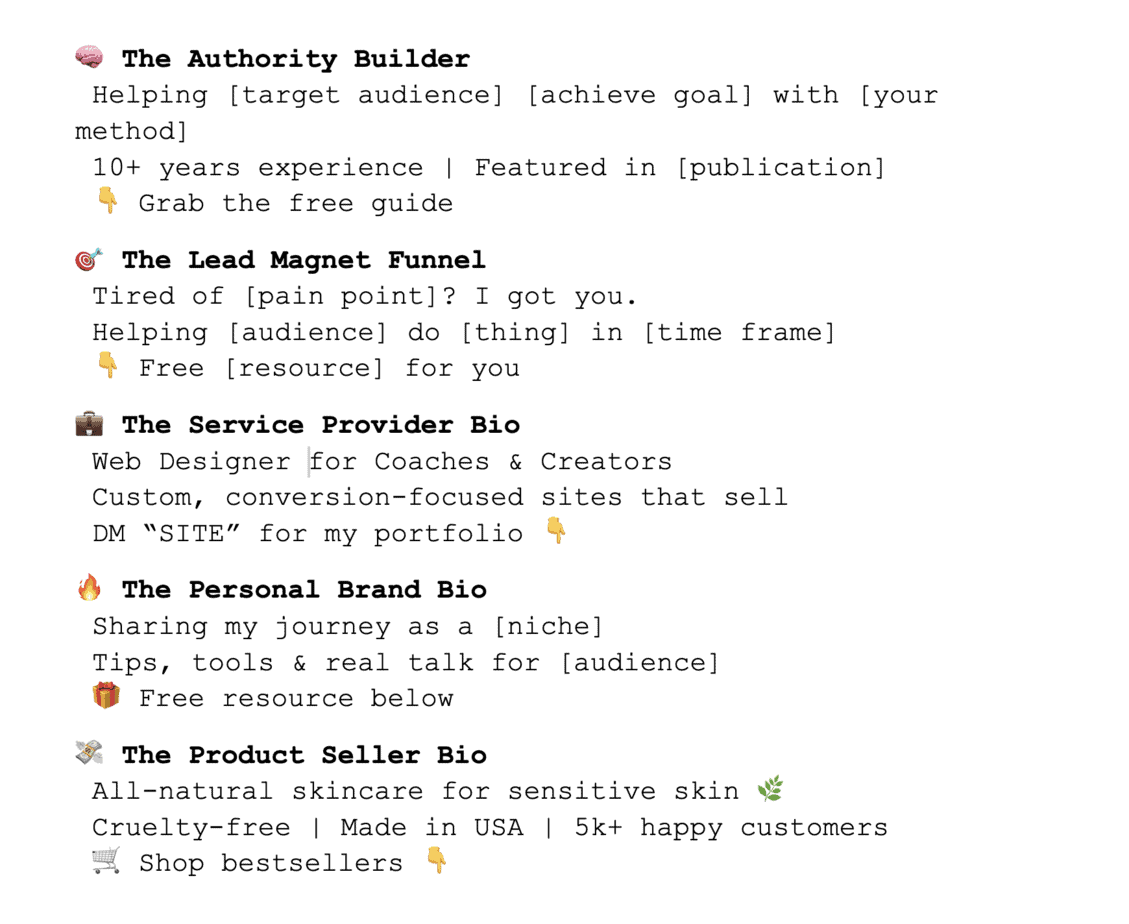
1. Bio Optimization
Your Instagram bio isn’t just for personality—it’s now a searchable field.
Add a keyword-rich line that clearly states who you help and how.
Bad: "Dog mom | Traveler | Coffee lover"
Good: "Helping busy moms meal prep in 10 minutes a day 🍽️ | Free guide 👇"
Include keywords in:
- Name field (e.g. “Piano Teacher for Beginners”)
- Description (what you do, who you serve)
- Link (support your topical relevance)
2. Caption Keyword Integration
Captions are now indexed for relevance.
Place core keywords in:
- The first two lines (where they weigh more)
- In natural sentence structure (not just keyword stuffing)
- As part of a helpful or engaging narrative
Think of captions as mini blog posts—your goal is to both engage and be found.
3. Alt Text Optimization
Instagram auto-generates alt text, but you can (and should) customize it.
Use alt text to describe your image and reinforce your keyword.
Example:
Instead of "Photo of smoothie bowl" →
Use: "High-protein vegan breakfast bowl with berries and chia seeds"
This improves accessibility and searchability.
Hashtag Strategy Evolution
Gone are the days of spamming 30 generic hashtags. The algorithm now evaluates:
- Hashtag relevance
- Niche consistency
- Audience intent
Use this evolved framework:
30-30-30 Hashtag Research Method
Create three sets of 30 hashtags:
- Niche Core Tags (e.g. #MealPrepTips, #MacrosMadeEasy)
- Trending Tags (rotate 5–10 based on what’s currently hot)
- Community Tags (small-medium size, 10k–200k posts, more targeted)
Rotate these sets strategically. Avoid repeating the same exact combo daily.
Community Hashtag Participation
Actively engage with the content inside your niche hashtags:
- Like, comment, and follow relevant accounts
- Join challenges or themed days (#TuesdayTips, etc.)
The algorithm notices your engagement patterns—this is an underused growth lever.
Branded Hashtag Development
Create your own hashtag to:
- Track UGC (user-generated content)
- Host challenges
- Build a content library
Examples:
- #TeamRootika for a nonprofit campaign
- #InstaLabTips for course content
- #DailySketchWithAnna for creators
Encourage followers to use it for features or giveaways.
Search Algorithm Optimization
Instagram search favors:
- Relevance (keywords, context)
- Popularity (saves, shares, clicks)
- Recency and consistency
1. Profile Optimization for Discoverability
Make sure your profile signals exactly what you do and who you serve.
Checklist:
- Clear username (avoid numbers/symbols unless branded)
- Keyword in display name (e.g., “Instagram Coach – Jan Oršula”)
- Bio with a clear value statement and CTA
Your profile should pass the "can I tell what you do in 5 seconds?" test.
2. Content Categorization Strategies
Use consistent language, formats, and themes so the algorithm can correctly classify your posts.
- Use similar terminology across captions, hashtags, alt text
- Stay within 2–3 niche buckets (e.g., Fitness + Recipes + Mindset)
This helps you show up in the “related content” clusters on Explore and suggested posts.
3. Location-Based Optimization
If you’re a local business or location-specific brand, tag your:
- Posts
- Stories
- Reels
- Bio (city or region)
People search by location more than you think—especially for services, events, or tourism.
Advanced Engagement and Community Building
In 2025, engagement isn’t just a vanity metric—it’s a survival mechanism.
Instagram’s algorithms are trained to prioritize content that creates community, not just clicks. That means the more meaningful interactions you generate, the more consistently your content gets shown—especially to new, unconnected audiences.
This section covers high-impact, algorithm-friendly tactics to boost engagement, build loyal followers, and turn casual viewers into lifelong fans.
Meaningful Interaction Strategies
Instagram’s algorithm knows the difference between passive and active engagement. To stay in the algorithm’s good graces, focus on triggering real interaction signals.
1. Comment Conversation Starters
Don’t just ask “What do you think?”—prompt intentional responses.
Use structured prompts like:
- “What’s one habit that changed your life?”
- “Finish this sentence: I used to think ___, but now I know ___.”
- “If you could only keep one tool from this list, which one?”
Bonus: Respond to every comment within the first 2 hours to spark conversations (and feed the algorithm).
2. DM Engagement Techniques
The DM is one of the strongest relationship signals on the platform.
Try this:
- Add a DM CTA at the end of carousels or Reels (“DM me the word ‘START’ for the guide”)
- Use poll responses to trigger auto-DMs (via automation tools like Manychat or Meta’s native flows)
- Run mini Q&A sessions that drive direct interaction
The algorithm heavily rewards accounts that generate inbound messages.
3. User-Generated Content Campaigns
UGC isn’t just great for social proof—it trains the algorithm that your brand is community-centered.
Strategies:
- Run challenges or giveaways using a branded hashtag
- Feature customer stories or testimonials in Reels/Stories
- Create templates people can remix (carousel designs, filters, formats)
This taps into network effects—and improves both reach and retention.
Collaboration and Partnership Optimization
Instagram prioritizes content that connects audiences, not just accounts. Strategic collaboration is one of the fastest ways to boost your algorithm exposure.
1. Influencer Collaboration Strategies
Forget paying big names. Partner with micro-influencers (2k–50k followers) in your niche.
Best formats:
- Collab Reels (you both appear as creators—algorithm loves this)
- Story takeovers
- Cross-posting testimonials or results
Micro-collabs often yield better engagement than celebrity endorsements.
2. Cross-Account Promotion Techniques
Build a circle of 3–5 similar creators and rotate:
- Monthly content swaps
- Shoutouts in Stories or Lives
- Co-branded giveaways
Shared audiences = higher trust = better algorithm placement.
3. Community Partnership Development
If you’re a brand or non-profit, partner with:
- Local creators
- Mission-aligned orgs
- Complementary service providers
Create shared content or dual-host events/AMAs to blend audiences.
Instagram boosts content that appears in multiple networks at once.
Retention and Loyalty Building
The hidden growth lever most creators miss: keeping the audience you already have.
Retention sends powerful signals to the algorithm that your account is worth promoting long-term.
1. Stories Usage for Follower Retention
Your existing followers need to be nurtured daily. Stories are your best tool.
Try this daily 3-part Story sequence:
- Micro moment: Something real or relatable (raw footage > polished)
- Engagement: Use a sticker (poll, slider, Q box)
- Call to action: Direct to your latest Reel, carousel, or DM
This trains the algorithm that your followers want to hear from you—boosting Feed and Reels visibility too.
2. Exclusive Content Strategies
Make your followers feel like insiders.
- Launch Instagram Close Friends content (e.g., BTS, first look, sneak peeks)
- Drop content previews or lead magnets only via Story
- Host live sessions with audience-submitted questions
Higher retention = higher algorithm priority.
3. Community Value Creation
Don't just broadcast—belong.
- Feature your followers
- Celebrate wins (even unrelated to your product)
- Use your platform to connect them to each other
You’ll build a movement, not just a following—and Instagram’s algorithm is designed to reward movement.
Instagram Algorithm Analytics: How to Measure What Works
If content is the engine, analytics is the GPS.
In 2025, the creators and brands who win on Instagram are not the ones who post the most—they’re the ones who measure what matters and iterate quickly. This section breaks down how to read the right data, interpret algorithmic signals, and continually improve your content performance using Instagram’s built-in tools (and a few extras).
Key Metrics Beyond Vanity Numbers
Follower count and likes no longer tell the full story.
To understand how well the algorithm is responding to your content, focus on behavioral signals that indicate relevance, retention, and intent.
1. Engagement Rate (ER)

Formula:
(Likes + Comments + Saves + Shares) ÷ Total Followers × 100
Target:
- 1–3% = baseline
- 4–6% = strong
- 7%+ = algorithm loves you
Don’t obsess over likes alone—saves and shares weigh more in 2025.
2. Reach vs. Impressions
- Reach = unique viewers (used to measure discovery potential)
- Impressions = total views (used to track rewatching or retention)
A high impressions-to-reach ratio (2.5x–3x+) on Reels = great loop rate, which the algorithm rewards.
3. Conversion Signals
Monitor what content actually drives actions:
- Profile visits after a post = strong interest signal
- Follows per post = unconnected reach effectiveness
- Link clicks = purchase or funnel intent
These are the algorithm’s indicators that your content is high-value.
Instagram Insights Mastery
Don’t just skim the Insights tab—mine it for strategic decisions.
1. Audience Demographics
Track:
- Age ranges
- Top locations
- Active hours and days
Use this data to personalize captions and optimize posting times.
2. Content Performance Evaluation
Compare posts using:
- Saves per reach
- Shares per reach
- Follows generated per post
These micro-metrics tell you what’s worth scaling and repurposing.
3. Posting Time Identification
Use:
- “Most active times” in Insights
- A/B tests with similar content posted at different hours
- Third-party tools like Later, Flick, or Metricool to find timing trends
Consistency matters—but strategic timing still boosts early engagement velocity (key for the algorithm).
Continuous Improvement Framework
The best Instagram strategies in 2025 aren’t static—they’re systems.
Set a recurring content audit routine:
- Weekly: Top 3 posts, bottom 3 posts — what worked? What didn’t?
- Monthly: Update content plan based on best performers
- Quarterly: Deep dive into follower growth patterns, Reel performance, and SEO signals
Use this cycle to double down on winners and cut dead weight.
A/B Testing Methodologies
Test one variable at a time:
- Caption format
- Cover design (especially for Reels/carousels)
- CTA placement
Track results over at least 7–10 posts for reliability.
Micro testing > guessing. Small tweaks can produce major algorithm gains.
2025 Predictions and Future-Proofing
If the last five years on Instagram have taught us anything, it’s this: the algorithm will change—again.
But the creators and brands who understand the principles behind the algorithm won’t just survive—they’ll thrive. This section looks at where Instagram is heading, what trends to prepare for, and how to build a content strategy that adapts to whatever comes next.
Emerging Algorithm Trends
1. Hyper-Personalized Feeds
Instagram’s AI is becoming more individualized than ever. Instead of one-size-fits-all content, expect:
- Feeds that feel like “for you” pages, customized by micro-behavior
- Content clusters based on niche relevance and engagement depth
- More weighting on who interacts with your content, not just how many
Creators who focus on depth (comments, shares, DMs) will outperform those chasing surface-level virality.
2. Search and SEO Take Center Stage
Instagram is evolving into a full-scale visual search engine. Predictions include:
- Greater visibility of keywords in bios and captions
- “Google-style” autocomplete and topic hubs for niches
- More personalized Explore pages with search-based categorization
Optimizing for searchable content, not just scroll-stopping content, will be key to unconnected reach.
3. AI-Generated Content Signals
Instagram is experimenting with AI transparency indicators (e.g., AI-generated tags). We may see:
- Reduced reach for content flagged as generic or low-effort AI
- Higher visibility for original, human-centered content
- Hybrid content formats (AI-assisted + personal storytelling) outperforming pure automation
To stand out, creators must focus on authenticity and originality, not just output volume.
4. Commerce and Creator Integration
Instagram is becoming more commerce-focused without turning into a marketplace. Trends include:
- Algorithm favoring content that drives measurable business results (e.g., link clicks, purchases)
- Shoppable content prioritized in Feed and Reels
- More creator incentive programs tied to algorithm performance (especially around Reels and engagement benchmarks)
Businesses and creators should prepare to link engagement with outcomes.
Strategy Adaptation Framework
To future-proof your Instagram presence, you need a content system built on flexibility, relevance, and data.
1. Stay Informed with Platform Updates
Follow these sources regularly:
- @Creators (Instagram’s official tips)
- Adam Mosseri’s weekly videos and AMA sessions
- Instagram’s product blog and Help Center
- Reliable industry analysts and marketing newsletters
Block an hour a month to study trends and platform changes.
2. Build Evergreen Content Systems
Rely less on trends and more on:
- Evergreen content pillars that always matter (e.g., storytelling, FAQs, behind-the-scenes)
- Templates and frameworks that can be reused and adapted
- SEO-optimized profiles and captions that compound over time
Viral moments come and go—systems build long-term growth.
3. Prioritize Community Over Algorithms
The best insurance against algorithm shifts is loyalty.
Focus on:
- Email list growth from Instagram traffic
- Active DMs and community spaces
- Collaborations and cross-platform connection
If you build a true audience, the algorithm becomes your amplifier—not your lifeline.
Conclusion and Action Steps
The Instagram algorithm isn’t out to get you.
It’s not a mysterious force, and it’s not broken. It’s simply a system—one that rewards the kind of content people love, trust, and act on. If you understand how that system works, and build your strategy around it, the algorithm becomes your ally.
Here’s a quick recap of what we covered—and how to apply it in your next 30, 60, and 90 days.
Key Takeaways Summary
- Instagram isn’t one algorithm. It’s a network of AI-powered systems tailored to Feed, Reels, Stories, and Explore.
- 2025’s biggest shift is the separation between connected and unconnected reach—and the personalized treatment of each.
- High-performing content doesn’t just get likes. It sparks saves, shares, comments, profile taps, and DMs.
- Myths still hold creators back. Posting daily isn’t required. Long comments don’t guarantee growth. And yes, the shadowban is misunderstood.
- The real growth lever? Strategy. When you implement SEO, Reels retention, interactive Stories, community collaborations, and data-backed content planning, the algorithm has to respond.
30-60-90 Day Algorithm Optimization Plan
Here’s how to put this into action without getting overwhelmed:
Days 1–30: Lay the Foundation
- Audit your bio, name field, and username for keyword clarity
- Define your top 2–3 content pillars based on audience needs
- Start implementing the 3-1-3-1 content rhythm (3 reach, 1 value, 3 trust, 1 promo)
- Post at least 1–2 Reels/week using retention-based storytelling
- Engage in DMs and comment threads for real interaction signals
Days 31–60: Optimize for Discovery
- Add alt text to every new post with niche keywords
- Build 3 hashtag sets using the 30-30-30 method (core, trending, community)
- Launch one UGC or collaboration initiative
- Track saves/reach, shares/reach, and follows per post
- Test two posting times per week for better engagement velocity
Days 61–90: Scale and Refine
- Repurpose your best-performing content into carousels, Stories, or Lives
- Introduce “Close Friends” or exclusive Story content for retention
- Conduct a mini content audit: top 5 and bottom 5 posts—why did they perform?
- Expand on what worked: topic clusters, series formats, or recurring themes
- Plan 1 long-form, keyword-rich caption per week to build Instagram SEO presence
Final Words
The creators and businesses who win in 2025 aren’t the loudest or the trendiest—they’re the most strategic.
So don’t chase the Instagram algorithm. Understand it. Align with it. Use it to serve your audience better.
Because when your content makes someone stop, watch, think, respond, and share?
The algorithm doesn’t need to be hacked.
It works for you.